
Can Martial Arts Help Children Improve Focus and Concentration?

Focus and concentration are skills that children develop gradually. Some children can remain absorbed in an activity for long periods, while others find it difficult to stay attentive, remember instructions or complete a task without becoming distracted.
This does not necessarily mean that a child is being disobedient or not trying hard enough. Attention can be affected by age, tiredness, emotions, confidence, the environment and how interesting or demanding the activity feels.
Martial arts may provide a useful setting in which children can practise listening, observing, remembering and responding. These skills are developed through regular routines, progressive challenges and repeated practice.
Martial arts cannot guarantee improved concentration, and it should not replace professional support when a child has significant difficulties. However, well-structured training may help children strengthen the habits involved in paying attention and managing their actions.
Why This Happens
Children are surrounded by competing demands for their attention. Schoolwork, screens, noise, social situations and busy routines can make it difficult to slow down and concentrate on one task.
Concentration is also influenced by several connected abilities, including:
Listening to instructions
Ignoring distractions
Remembering what to do
Controlling impulses
Moving between different tasks
Continuing when something becomes difficult
Recognising and correcting mistakes
Managing frustration
These abilities are sometimes described as executive functions. They help children organise their thoughts and behaviour so that they can work towards a goal.
Attention Develops With Practice
Children are not born with adult levels of concentration. Their ability to focus develops as they grow and gain experience.
Young children may need instructions to be short, clear and supported by a demonstration. Older children may be able to remember a longer sequence but still need reminders when learning something unfamiliar.
Asking a child to “concentrate” does not always tell them what they need to do. They benefit from opportunities to practise specific behaviours, such as watching carefully, waiting for a signal and completing one step before beginning the next.
Movement Can Support Engagement
Some children find it easier to pay attention when learning includes physical movement.
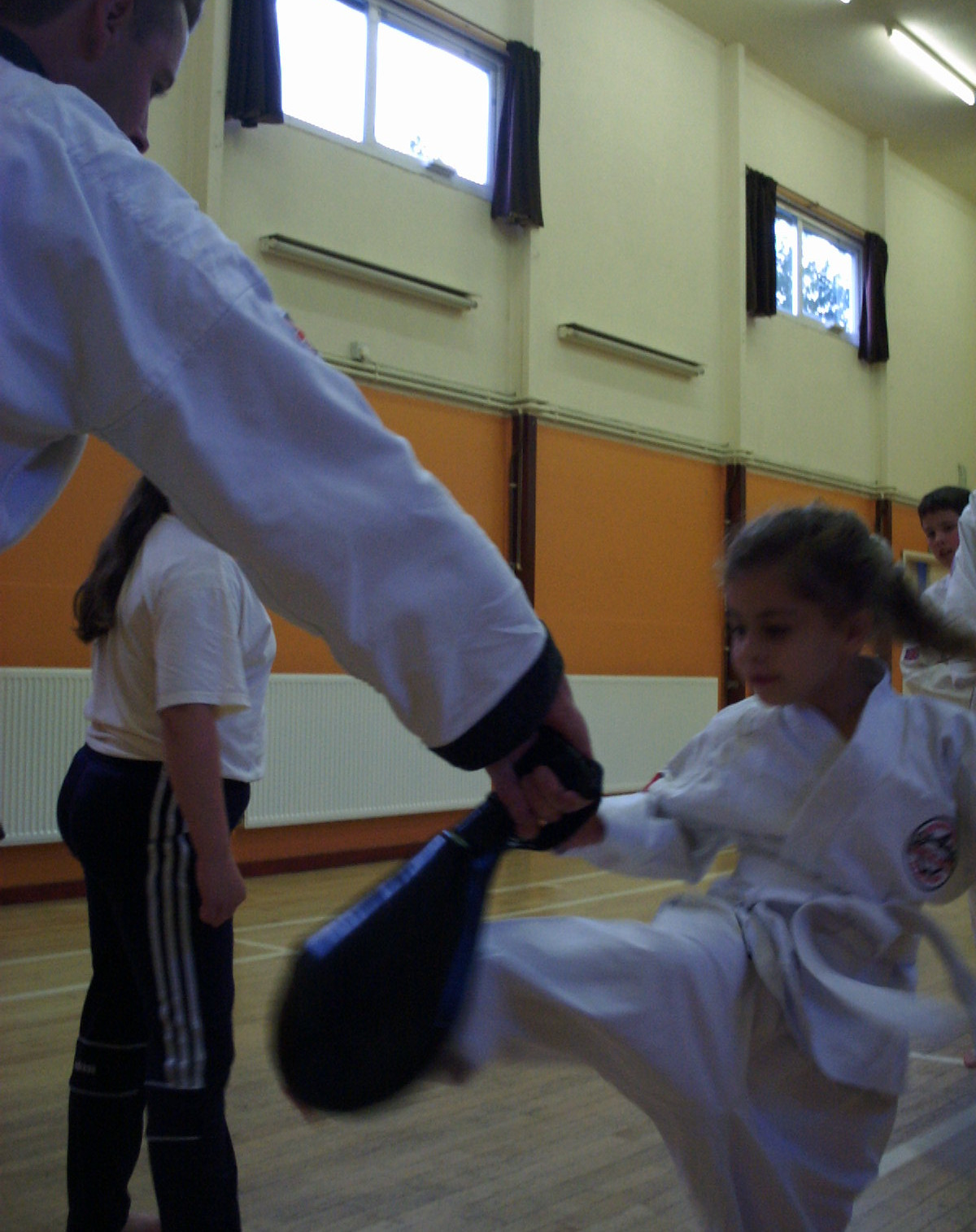
Martial arts combines listening with observation and action. A student may watch a technique, remember its sequence and then attempt to reproduce it using controlled movement.
This gives the child an immediate task on which to focus and allows the instructor to provide clear feedback.
Confidence Affects Concentration
Children may lose focus when they believe they cannot complete an activity.
If a task feels overwhelming, a child may avoid it, become frustrated or distract others. Breaking the task into manageable stages can help the child experience progress.
Small achievements can build confidence and make it easier for the student to remain involved when the next challenge appears.
Routine Creates Predictability
A structured class helps children understand what is expected of them.
Regular routines—such as lining up, greeting the instructor, warming up and following class commands—reduce uncertainty. When children become familiar with these routines, they can use more of their attention for learning.
Predictability does not mean that every lesson must be identical. It provides a secure framework within which new activities can be introduced.
What Science Says
Research suggests that regular physical activity can support children’s physical health, mental wellbeing and cognitive development. The World Health Organization identifies improved cognitive outcomes as one of the potential benefits of physical activity for children and adolescents.
Martial arts can be particularly engaging because it combines physical exercise with mentally demanding tasks. Students must observe movements, remember sequences, control their responses and adjust their actions according to instructions.
These activities may exercise aspects of executive function, including attention, working memory, self-control and cognitive flexibility.
A UK randomised study involving 240 primary-school children found that an 11-week introductory Taekwondo course was associated with improvements in attentional self-regulation and executive attention. However, improvements were not found across every outcome measured, demonstrating why claims should remain balanced. Read the study on PubMed.
A broader review of complex and coordinated movement activities found growing interest in their relationship with children’s cognition. It also identified gaps in the available research and the need for more rigorous studies, particularly for activities combining rhythmic and complex movement, including martial arts. Read the review on PubMed.
The evidence is promising, but martial arts should not be described as a treatment or guaranteed way to improve academic performance. Children differ, teaching quality matters and benefits are more likely to develop through regular, appropriate participation.
Practical Support Steps
Parents and instructors can help children develop concentration through the way activities are introduced and supported.
1. Give One Clear Instruction at a Time
Long explanations can be difficult to remember, especially when the movement is new.
Begin with one or two important points. Additional details can be introduced once the student understands the basic action.
2. Demonstrate the Movement
Children often learn more effectively when they can see and hear what they are expected to do.
A clear demonstration provides a visual reference and helps connect spoken instructions with physical movement.
3. Break Techniques Into Smaller Parts
Forms and combinations may contain several movements performed in sequence.
Practising each section separately allows the child to concentrate on one manageable challenge before joining the movements together.
4. Use Repetition With Purpose
Repetition helps students remember movements, but it should remain thoughtful.
Rather than simply completing a technique many times, students can be asked to focus on one point, such as their stance, balance, direction or control.
5. Reduce Unnecessary Distractions
A calm and organised training environment can make instructions easier to follow.
Students should know where to stand, what equipment they need and when they are expected to watch, listen or practise.
6. Include Short, Achievable Challenges
Concentration can be developed gradually.
A child might first be asked to remember two movements, then three or four as their confidence and ability improve. The challenge should be demanding enough to encourage effort without becoming overwhelming.
7. Recognise Effort and Improvement
Praise should acknowledge the behaviour that helped the child succeed.
For example:
“You watched that demonstration carefully.”
“You kept trying even when the movement was difficult.”
“You remembered the whole sequence.”
“You waited for the instruction before beginning.”
This helps the child understand what effective concentration looks like.
8. Allow Appropriate Movement Breaks
Children do not need to remain completely still to be learning.
Alternating between explanation, demonstration and physical practice can help maintain engagement. Instructors should adapt the pace of the lesson to the age and experience of the group.
9. Avoid Comparing Children
Children develop attention, coordination and confidence at different rates.
Comparisons may cause embarrassment or frustration. Progress is better measured against the child’s previous ability and effort.
10. Look at the Wider Picture
Difficulty concentrating can sometimes be connected to:
Tiredness
Hunger or thirst
Worry or stress
Sensory discomfort
Lack of confidence
An activity being too easy or too difficult
Additional learning or developmental needs
If concerns are persistent or affect several parts of a child’s life, parents may wish to speak with the child’s school or an appropriate healthcare professional.
How Horangi Supports This
At Horangi Tang Soo Do Association, children are given structured opportunities to practise focus, listening and self-control.
Our approach includes:
Clear class routines
Age-appropriate instructions
Visual demonstrations
Techniques taught in manageable stages
Regular repetition and review
Progressive challenges
Constructive feedback
Recognition of individual effort
Respect for different learning needs
A calm and supportive training environment
Students learn that concentration does not mean performing everything perfectly. It means returning their attention to the task, listening to feedback and continuing to practise.
Over time, these habits may help children become more patient, aware and confident in their ability to learn.
Every child develops differently, but martial arts can provide a positive environment in which focus and concentration are practised through purposeful movement.
If you would like your child to experience Tang Soo Do, use the Book a Class button below to contact Horangi Tang Soo Do Association.
This article provides general educational information. Martial arts should not replace individual educational, developmental or medical assessment and support.


Comments